Vishwa Shanti Stupa, Rajgir
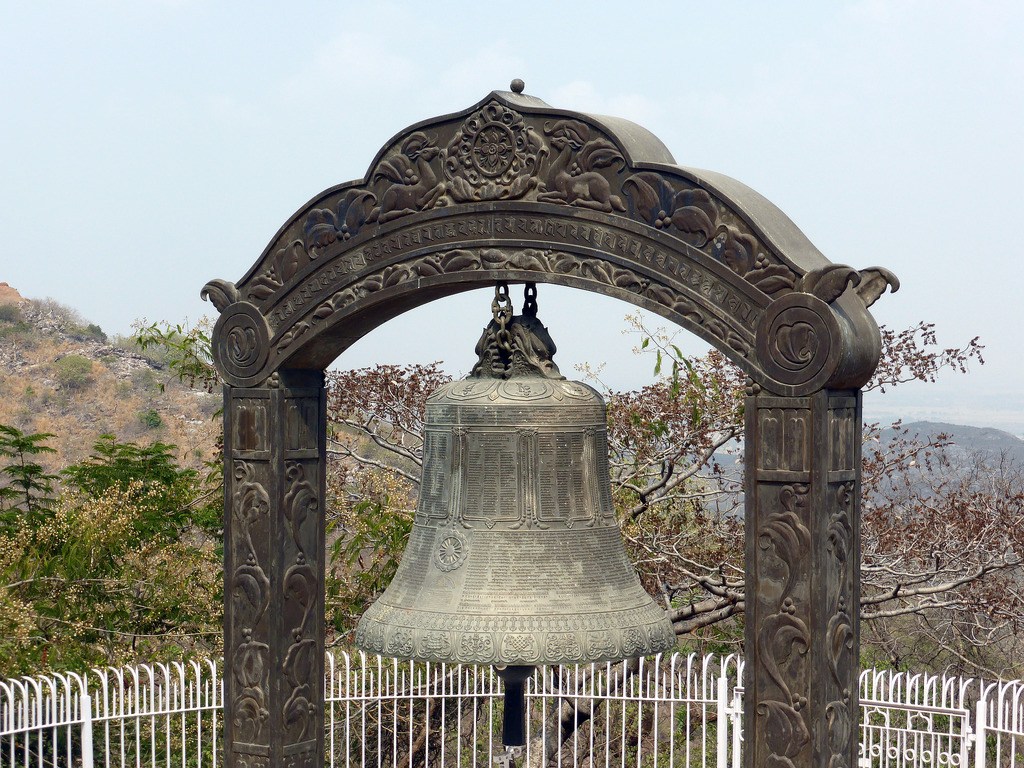
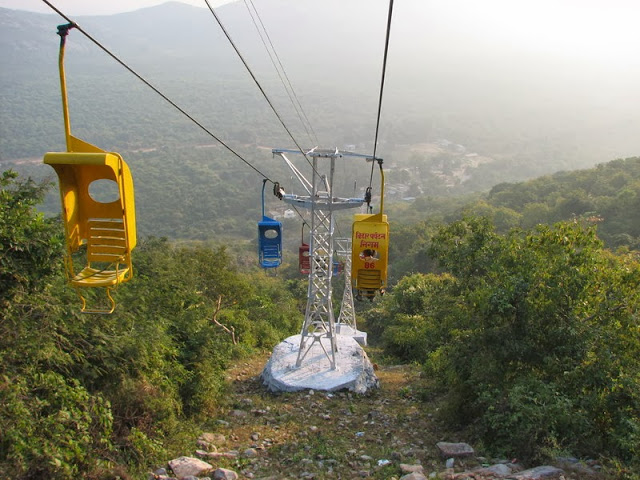
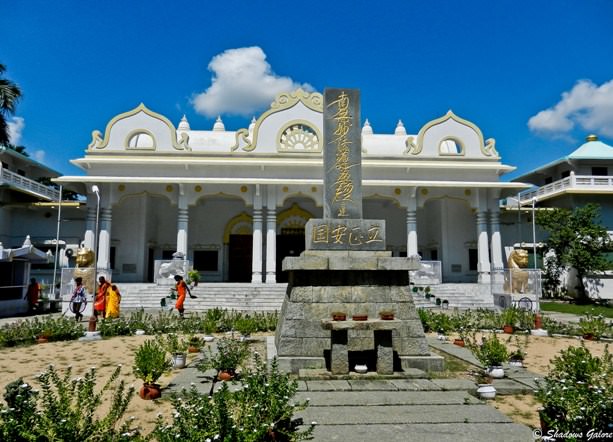
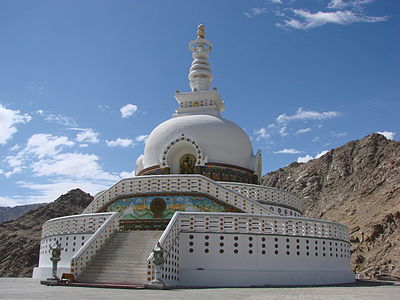
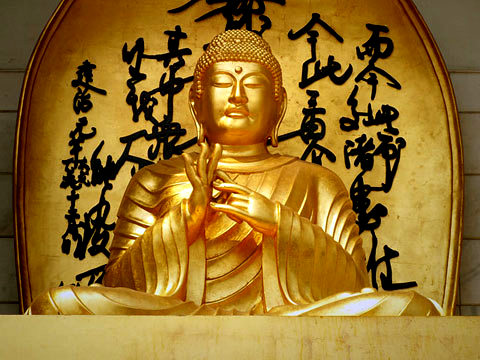
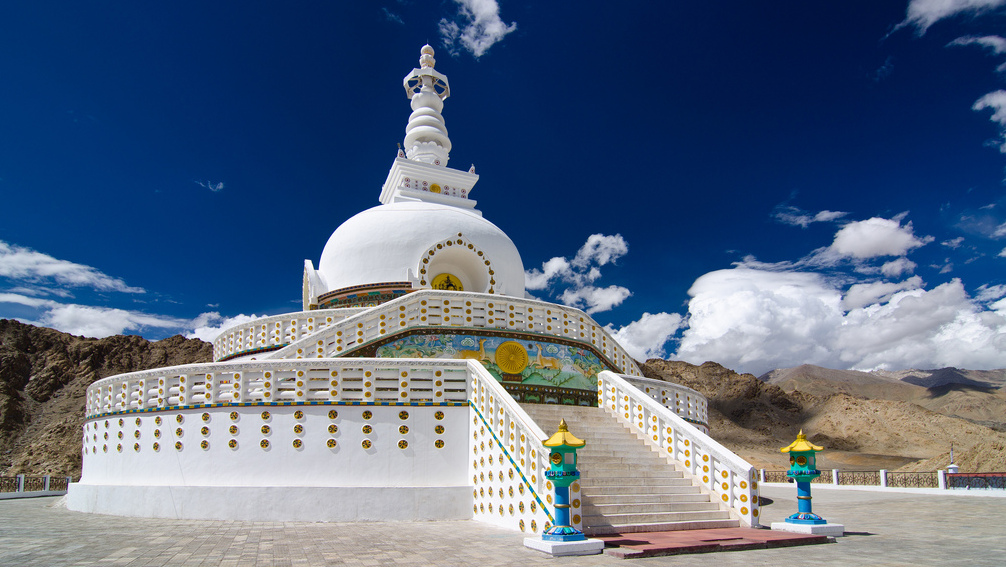
Vishwa Shanti Stupa (World Peace Pagoda) is a popular Buddhist pilgrim site. It is situated on the Ratnagiri hill. It is a white beauty, showing the four phases of Buddha’s life through four golden statues of Lord Buddha. The Peace Pagoda is said to be built by a Japanese Buddhist monk, Nipponzan Myohoji in 1969. This stupa is world’s tallest Peace Pagoda and considered as the symbol of peace and harmony.
Rajgir is also a place of historic importance situated in the state of Bihar. It is in the district of Nalanda. Besides being a historical location, Rajgir stands as a religious place for both Buddhism and Jainism, as this region is said to be related to both Gautama Buddha and Mahavir. Rajgir was known for its royal importance during the earlier times. So, most of the sites attracting the tourists are either religious or historical places.
The name Rajgir came from Rājagṛiha 'house of the king' or "royal house", or the word rajgir might have its origin in its plain literal meaning, "royal mountain". It was the ancient capital city of the Magadha kings until the 5th century BC when Udayin(460-440 BC), son of Ajatshatru, moved the capital to Pataliputra. In those days, it was called Rajgrih, which translates as 'the home of Royalty'. Shishunaga founded Shishunaga dynasty in 413 BCE with Rajgir as its initial capital before it was moved to Pataliputra.
Rajgir is also famous for its association with Mauryan dynasty Kings Bimbisara and Ajatashatru. Ajatashatru kept his father Bimbsara in captivity here. The sources do not agree which of the Buddha's royal contemporaries, Bimbisaraand Ajatashatru, was responsible for its construction. Ajatashatru is also credited with moving the capital to Pataliputra(modern Patna).
The epic Mahabharata calls it Girivraja and recount the story of its king, Jarasandha, and his battle with the Pandava brothers and their allies Krishna. Jarasandha who hailed from this place, had been defeated by Krishna 17 times. The 18th time Krishna left the battlefield without fighting.Because of this Krishna is also called 'ranachorh' (one who has left the battlefield).
Lord Mahavira, 24th Tirthankara spent fourteen years of his life at Rajgir and Nalanda, spending Chaturmas (i.e. 4 months of the rainy season) at a single place in Rajgir (Rajgruhi) and the rest in the places in the vicinity. It was the capital of one of his Shravaks(follower) King Shrenik. Thus Rajgir is a very important religious place for Jains.The twentieth Jain tirthankara, Munisuvrata is supposed to have been born here.An ancient temple(about 1200 years old) dedicated to Munisuvrat bhagwan is also present here along with many other jain temples.This temple is also a place for four Kalyanakas of Bhagwan Munisuvratnath
About Rajgir
| State | Bihar |
| City | Rajgir |
| Dist. | Nalanda |
| Language | Hindi, English |
| Latitude | 25.0173 N |
| Longitude | 85.4162 E |
| Sea Level | 73 m |
| Best Time To Visit | October to March |
| Nearest Railway Station | Gaya(78km) |
| Nearest Airport | Patna(101km) |
Map
Gallery